

Scrolling through X or TikTok and see someone comment “ratio”? You’re not alone — it’s one of the most confusing internet terms right now. In slang, ratio means something is unpopular online, but the way people use it goes far beyond that simple definition.
This guide breaks down exactly what ratio means, where it came from, and how people actually use it in real conversations — from savage tweet replies to playful group chats. By the end, you’ll know exactly how to spot a ratio, respond to one, and use the term correctly yourself.
What Does Ratio Mean in Slang?
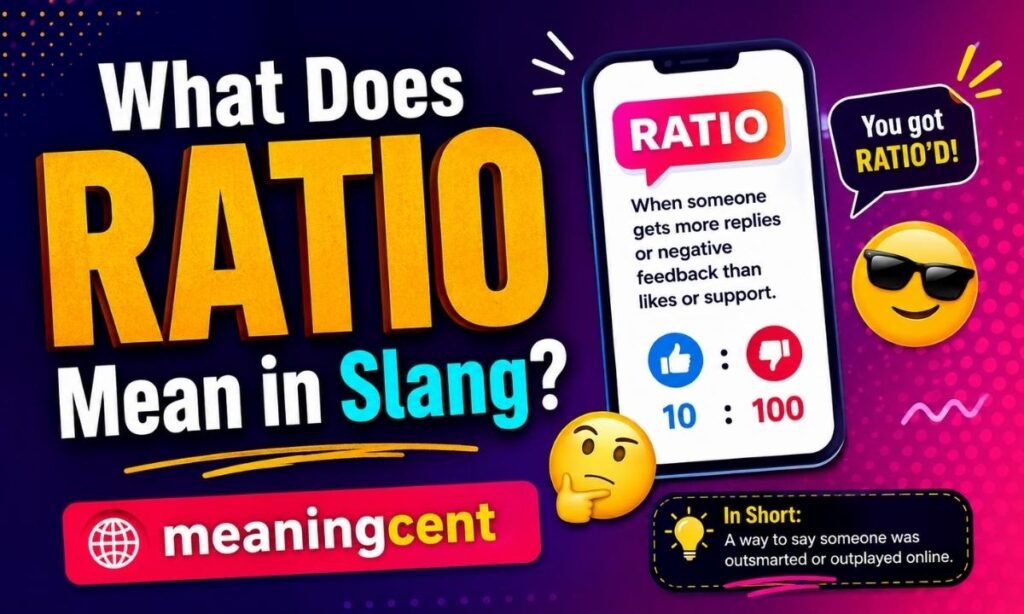
In slang, “ratio” means a post got more replies or comments than likes, showing that people disagree with it. When this happens, the post is said to be “ratioed.”
The term comes from math, but online it has nothing to do with numbers on paper. It’s a social signal. A high reply count compared to likes tells everyone: this post didn’t land well.
Ratioed vs Ratio’d (Spelling)
You’ll usually see it spelled two ways:
- Ratioed — the more common spelling, used as a full past-tense verb
- Ratio’d — a shorter, casual version often used in fast typing or memes
Both mean exactly the same thing. Neither is more “correct” — it’s just a style choice.
Ratio as a Noun vs Verb
As a word, “ratio” can work as:
- A noun → “That was a brutal ratio.”
- A verb → “You just got ratioed.”
Where Does Ratio Come From? (Origin & Internet Culture)
Ratio started as an observation on Twitter, now X, sometime around 2017. Users noticed that certain tweets — especially unpopular or controversial ones — attracted way more replies than likes.
The 2017 Twitter Origin
One well-known moment helped push the term into the mainstream: a major airline’s public response to a passenger controversy received tens of thousands of replies but only a fraction as many likes. Commentators pointed to this as a textbook example of “the ratio,” and the phrase stuck.
How Ratio Went Mainstream (2020 Onwards)
By 2020, the term had fully entered internet culture. Fan communities, often called “stans,” started using ratio as a tool — deliberately trying to out-engage people they disagreed with. Around this same time, it got its first formal entry on slang-tracking sites like Urban Dictionary.
Today, ratio has spread far past Twitter/X. It shows up on TikTok, Instagram, YouTube, and even in everyday texting.
How Does Ratio Work? (Mechanics: Replies vs. Likes, Brigading)
A ratio happens when a post’s replies or comments outnumber its likes by a noticeable margin. The bigger the gap, the “worse” the ratio.
Here’s the basic pattern:
- Someone posts an opinion or take
- People disagree in the replies
- Reply/comment count climbs past the like count
- Others notice and comment “ratio” to point it out
Sometimes this happens organically. Other times, it’s driven by brigading — when a large group deliberately shows up to reply to or downvote a specific post. Brigading often happens when a public figure’s fans mobilize against posts they see as critical of that person.
Not every ratio is dramatic. A small gap between replies and likes suggests mixed reactions. A massive gap means the post was genuinely unpopular.
Platform-by-Platform Usage (Twitter/X, TikTok, Instagram, Facebook)
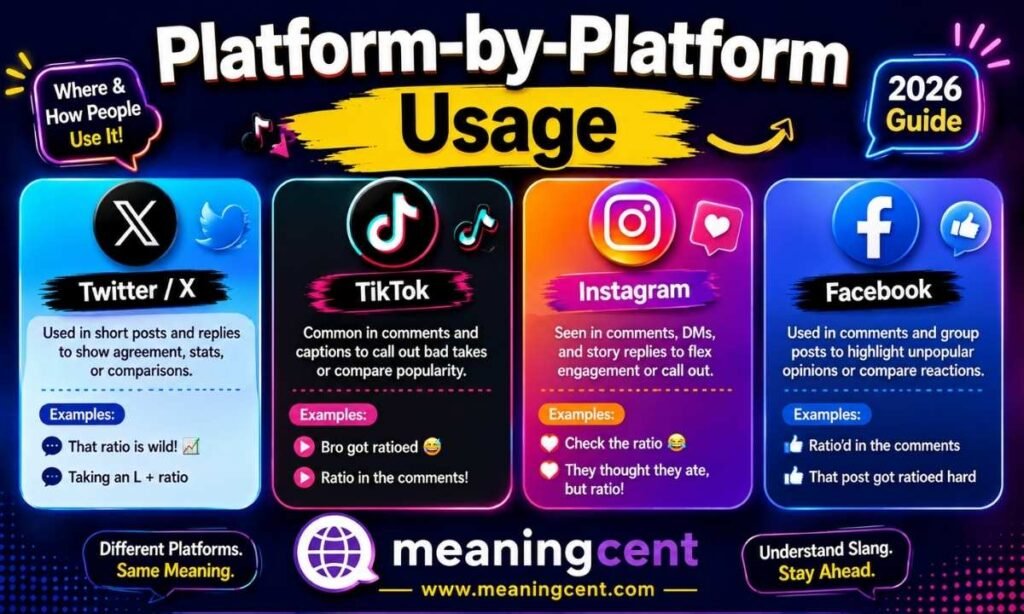
Ratio doesn’t work the same way everywhere. Here’s how it shows up across platforms:
Ratio on Twitter/X
Where the term started, and still the most common place to see it. Public reply and like counts make ratios easy to spot.
Ratio on TikTok
Ratios happen in comment sections, often on divisive opinions or takes in a video’s caption.
Ratio on Instagram
Less common, but visible in comment sections under controversial captions or posts.
Ratio on Facebook
Ratios show up mostly in comment threads on public posts, especially around debated topics.
The core idea stays the same everywhere: more critical engagement than positive engagement.
Why Doesn’t Reddit Have Ratios?
Reddit doesn’t really have ratios because it uses a different feedback system — upvotes and downvotes — instead of separate like and reply counts.
On Reddit, people don’t need to comment to show disapproval. They can simply downvote a post, which pushes it down or out of view entirely. A post that gets a lot of disagreement often just gets marked “controversial” instead of being publicly “ratioed.”
This is a key difference from platforms like Twitter/X, where likes and replies are separate, visible numbers that anyone can compare at a glance.
READ MORE RELATED POST BMF MEANING IN TEXT
“L + Ratio” Meaning
“L + ratio” is a mocking phrase that combines “L” (short for loss) with “ratio” to double down on an insult.
It’s used as a meme-style reply when someone thinks a post is especially bad. The full combo suggests: you lost this exchange, and the engagement numbers prove it.
Example:
Post: “Pineapple doesn’t belong on pizza.”
Reply: “L + ratio.”
People often extend it further for comedic effect, adding extra phrases like “unfollowed” or “you fell off” after it. It’s meant to be playful and exaggerated, not usually a serious insult.
Tone & Context Variations (With Real Chat Examples)
The word “ratio” can feel completely different depending on tone. Here’s how it plays out in real conversations:
Playful/Funny Tone
A: I’m the best gamer in this group.
B: Ratio incoming.
Sarcastic Tone
A: I forgot my keys again.
B: Ratio yourself.
Serious/Confrontational Tone
A: Your take was unfair.
B: That’s why you got ratioed.
Friendly Debate Tone
A: Tea is better than coffee.
B: Ratio. Hard disagree.
In light contexts, it’s a joke between friends. In heated arguments, it can feel like a dismissal. Reading the tone of the conversation matters more than the word itself.
What Does Ratio Mean in an Argument?
In an argument, saying “ratio” means the other person believes your point is unpopular or wrong, and that others will agree with them.
It works as a shortcut. Instead of writing out a full counter-argument, someone just says “ratio” to imply that public opinion is against you. It’s often used to end a debate quickly, especially online.
This use isn’t limited to social media comments — it’s spread into text messages and group chats too, as a quick way to challenge someone’s opinion without a long explanation.
Ratio Meme Meaning
As a meme, “ratio” has become a template of its own. People pair it with reaction images, exaggerated insults, or absurd combinations like “ratio + L + you fell off.”
The humor comes from how disproportionate the reaction feels compared to the original post. A simple opinion about pizza toppings gets treated like a major online defeat — and that exaggeration is the joke.
Meme versions of ratio are rarely meant to be taken seriously. They’re more about internet humor and timing than genuine criticism.
Who Uses This Term? (Gen Z vs. Millennials)

Ratio is used mainly by Gen Z and younger Millennials who are active on social media.
Gen Z Usage
Uses it frequently, often as a built-in part of meme culture and everyday online banter.
Millennial Usage
Generally understand the term, but use it less often than younger users.
Older Users
May recognize the word “ratio” but not connect it to its slang meaning right away.
It’s most common in English-speaking online communities, particularly in the US and UK, but has spread globally through meme culture.
Ratio vs. Similar Slang Terms
Ratio overlaps with a few other slang terms, but each carries a slightly different meaning.
| Term | Meaning | Tone | Common Platform |
| Ratio | Reply/comment count beats likes | Confrontational, playful | Twitter/X, TikTok |
| L + Ratio | Combines “loss” with ratio for extra mockery | Mocking, meme-style | Twitter/X, TikTok |
| Clapped back | Responded sharply to criticism | Assertive | Instagram, Twitter/X |
| Owned | Clearly defeated in an argument | Blunt | Gaming, forums |
| Dragged | Criticized heavily by many people | Harsh | Twitter/X, TikTok |
| Clout | General online popularity or influence | Neutral | All platforms |
Ratio is specifically about engagement numbers. The others describe general criticism or popularity without that specific like-vs-reply comparison.
How to Reply When Someone Says Ratio
If someone comments “ratio” on your post, you have a few solid options:
Ignore It
Often the simplest and most effective response, especially if it’s meant to provoke.
Reply Calmly
Ask them to explain their disagreement if the conversation feels genuine.
Use Humor
A witty comeback can defuse the situation and even win people back over.
Reflect on the Feedback
If a lot of people agree, it might be worth reconsidering your original point.
Reacting with anger usually makes things worse. A calm or funny response tends to land better.
READ MORE RELATED POST BMF MEANING IN TEXT
How to Avoid Getting Ratioed
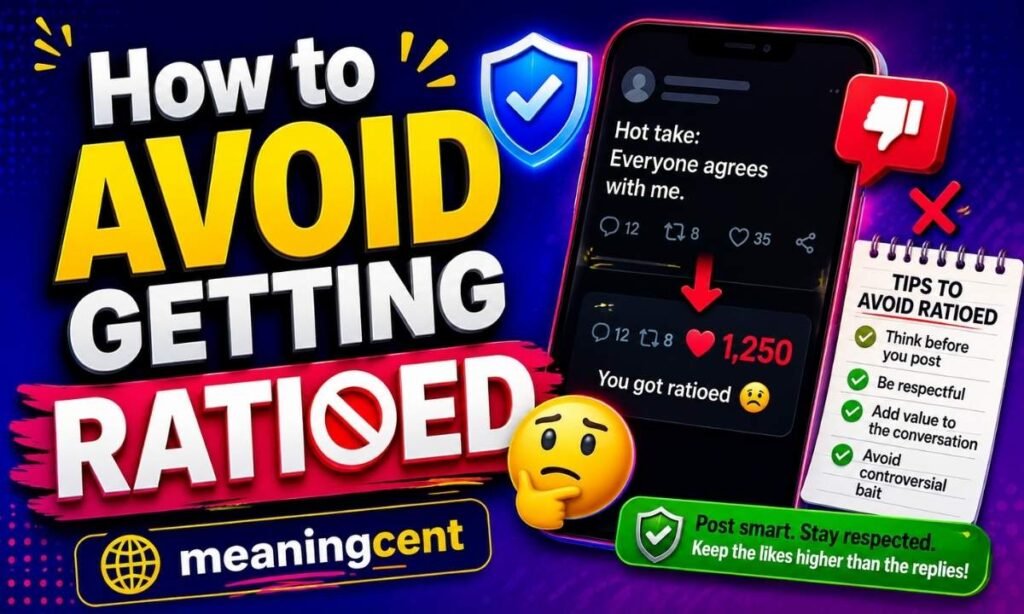
A few habits can lower your chances of getting ratioed:
- Think before posting — Consider how a controversial or dismissive opinion might land with your audience.
- Avoid deliberately provocative takes — Posts written purely to anger people are the most common target.
- Know your audience — What works with one group may not work with another.
- Engage respectfully — Respond to disagreement with calm explanation instead of escalation.
None of this guarantees you’ll never get ratioed. Sometimes even honest opinions attract disagreement. But avoiding intentionally inflammatory posts helps a lot.
Is Ratio Rude or Offensive?
Ratio isn’t inherently rude — its tone depends entirely on context.
When It’s Harmless
Between friends, it’s usually harmless and even affectionate.
When It Feels Dismissive
In heated arguments or public callouts, it can feel dismissive or mocking. It’s not considered a slur or offensive term, but it can come across as dismissive if used repeatedly against someone.
Is It Suitable for Formal Settings?
It’s not appropriate for formal settings. Save it for casual conversations, texting, or social media — not emails, school assignments, or workplace communication.
Frequently Asked Questions
What does ratio mean in slang?
It means a post received more replies or comments than likes, suggesting it was unpopular or controversial.
Is it “ratioed” or “ratio’d”?
Both spellings are used and mean the same thing. “Ratioed” is more common in formal writing; “ratio’d” appears more in casual texting.
What does ratio mean on social media specifically?
It refers to a post’s reply-to-like ratio being unusually high, which signals disagreement from the audience.
What does “L + ratio” mean?
It’s a mocking combo phrase meaning someone lost an online exchange and also got ratioed, often used as a joke.
Why doesn’t Reddit have ratios?
Reddit uses upvotes and downvotes instead of separate like/reply counts, so the same public “ratio” effect doesn’t apply the same way.
Is getting ratioed always bad?
Not always. It usually shows disagreement, but sometimes it’s just playful teasing between friends rather than real criticism.
Can ratio be used in real-life arguments, not just online?
Yes. People now use it in texts and casual conversations to imply that their view is more popular or “correct” than the other person’s.
Is it okay to use ratio in professional settings?
No. It’s informal slang best kept for casual chats, texting, and social media.
Final Thoughts
“Ratio mean” describes what happens when a post’s replies outnumber its likes, usually signaling disagreement or controversy. It started on Twitter/X around 2017 and has since spread across TikTok, Instagram, and everyday texting.
Whether it’s used playfully among friends or seriously in an online debate, understanding ratio meaning in slang helps you read the tone of a conversation and respond the right way.