

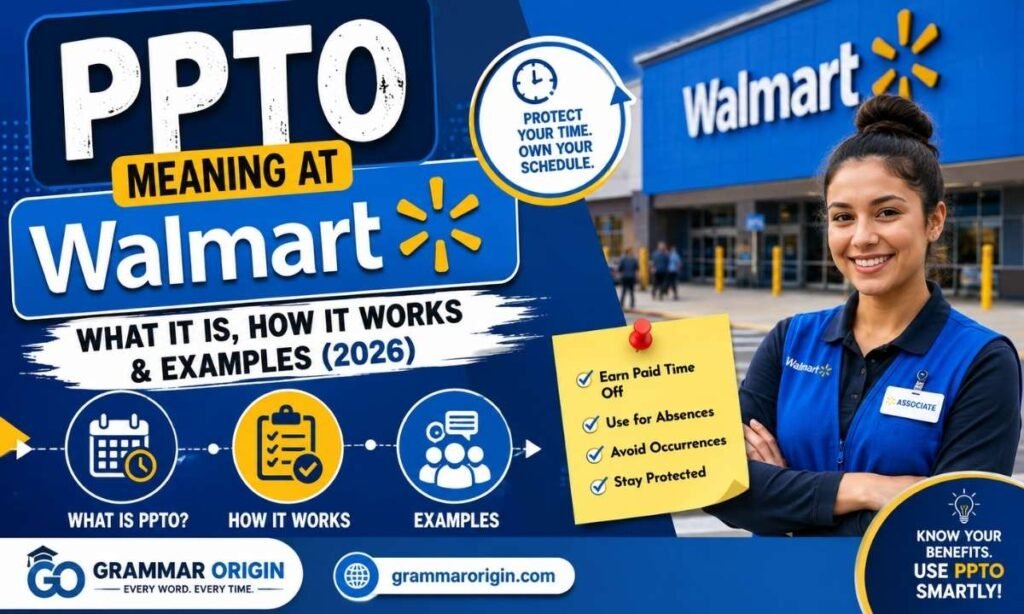
If you’ve seen “PPTO” on your Walmart schedule, paycheck, or attendance record and aren’t sure what it means, you’re not alone. PPTO stands for Protected Paid Time Off, a benefit that pays you for missed hours while also shielding you from attendance points — but the exact rules around earning, using, and losing it trip up a lot of associates.
This guide breaks down what PPTO actually means, how it’s earned, what happens when you run low, and real examples of when to use it. By the end, you’ll know exactly how to check your balance and use PPTO the right way.
What Does PPTO Mean?

PPTO stands for Protected Paid Time Off. It’s a type of paid leave that lets employees miss work for pay while also protecting them from attendance penalties.
The “protected” part is what sets it apart from regular PTO. Standard paid time off simply pays you for the hours you miss. PPTO does that too, but it also shields you from attendance points when used correctly.
Most people search for the PPTO meaning after seeing it on a schedule, paycheck, or employee app — most commonly at Walmart, where the term is widely used.
PPTO Meaning Explained in Simple Words
Think of it this way: if you call in sick and have no protected leave, you might get an attendance point. If you have PPTO and use it, you still get paid — and the point doesn’t count against you.
So PPTO does two jobs at once:
- Pays you for missed hours
- Protects your attendance record
That’s the whole idea in one sentence: PPTO turns an unplanned absence from a penalty into a paid, protected day off.
READ MORE RELATED POSTS CLICK ME
Is PPTO an Acronym or a Short Form?
Yes, PPTO is an acronym. Each letter stands for one word:
- P – Protected
- P – Paid
- T – Time
- O – Off
It’s a formal workplace term, not internet slang. You’ll see it in employee handbooks, scheduling apps, and payroll systems — not in texting or social media conversations.
PPTO at Walmart: How It Actually Works
At Walmart, PPTO is the main way hourly associates get paid, protected sick leave. It works alongside regular PTO, but the two are tracked separately and used differently.
How PPTO Is Earned (Accrual)
Associates start earning PPTO from their date of hire. Hours accrue based on service hours logged — this includes hours worked and hours already used from PTO or PPTO.
The exact accrual rate depends on your role and how long you’ve been employed, so your personal balance is best checked through your employee portal rather than guessed from a general rule.
PPTO vs Regular PTO Buckets at Walmart
Walmart splits paid leave into two separate buckets:
- Regular PTO – for planned time off, like vacations
- PPTO – for unplanned absences, like sickness or emergencies
If you don’t have enough PPTO to cover an absence, the system can pull from your regular PTO instead. But only the portion covered by PPTO protects you from attendance points — PTO alone does not.
The 7-Day PPTO Submission Rule
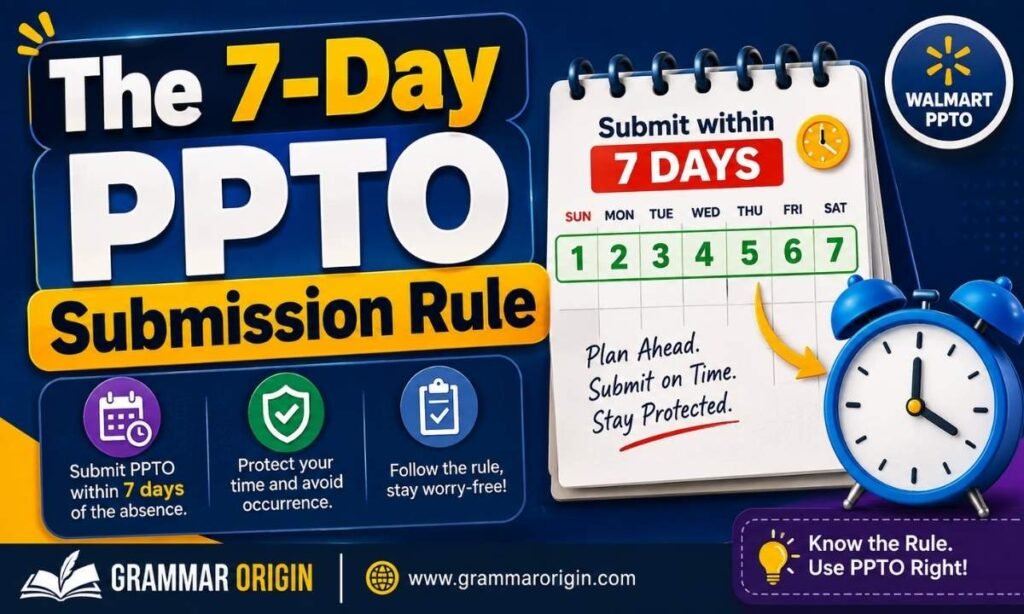
You generally have seven days from the date of an absence to submit PPTO and have it applied for attendance protection.
This deadline matters because your balance on the day you submit — not the day you actually miss work — is what gets applied to any resulting attendance points. Waiting too long can mean losing that protection even if you had enough PPTO available at the time.
What Happens If You Run Out of PPTO
If your PPTO balance can’t fully cover an absence, here’s what typically happens:
- The system automatically pulls the remaining hours from your regular PTO
- You still get paid for the missed time
- But only the hours covered by PPTO are protected from attendance points
In other words, running out of PPTO doesn’t mean you lose pay — it means you lose the attendance protection for the uncovered portion.
PPTO vs PTO: What’s the Difference?
| Feature | PTO | PPTO |
| Paid leave | Yes | Yes |
| Best for | Planned time off | Unplanned absences |
| Attendance protection | Usually no | Yes, when used correctly |
| Common use case | Vacation | Sickness, emergencies |
The short answer: PTO pays you, PPTO pays you and protects your attendance record. That protection is the entire reason PPTO exists as a separate category.
Does PPTO Cover Tardiness and Early Outs — Not Just Absences?
Yes. PPTO isn’t limited to full-day absences. It can also cover:
- Coming in late
- Leaving early
- Missing part of a shift
As long as you have enough PPTO available and submit it within the required window, partial-shift issues can be protected the same way a full absence would be.
PPTO and State Paid Sick Leave Laws
Some states legally require employers to offer paid sick leave. Where PPTO is offered, it can often satisfy that requirement, since it already functions as paid, job-protected leave for illness.
This matters if you’re comparing PPTO to your state’s sick leave rules — in many cases, PPTO isn’t just a company perk, it’s also doing the job your state law requires. Exact rules vary by state, so it’s worth checking your local labor department if you need specifics.
Examples of PPTO in Real Life
Example 1:
Sick Day Sarah wakes up with a fever. Instead of getting an attendance point, she submits PPTO. She still gets paid, and her absence is protected.
Example 2:
Family Emergency John’s child needs to be picked up from school. He leaves early and uses PPTO to cover the rest of his shift.
Example 3:
Car Trouble Emma’s car won’t start and she can’t make it to work. She applies PPTO to cover the missed hours.
Example 4:
Late Arrival David gets stuck in traffic and clocks in 20 minutes late. He uses a small amount of PPTO to protect against a tardiness point.
These examples show the same pattern: something unexpected happens, PPTO covers the pay, and it protects the attendance record.
Why Employers Offer PPTO
Unexpected situations happen to everyone — illness, emergencies, transportation problems. Without protected leave, employees might feel pressured to come to work when they shouldn’t, or risk penalties for staying home.
PPTO helps balance two things employers care about:
- Keeping operations running smoothly
- Supporting employees during genuine emergencies
It also reduces turnover. Employees who don’t have to choose between their paycheck and their health tend to stay longer and report higher satisfaction.
PPTO vs Similar Workplace Terms
| Term | Meaning | Attendance Protection |
| PPTO | Protected Paid Time Off | Yes |
| PTO | Paid Time Off | Usually no |
| Sick Leave | Paid leave for illness | Sometimes, by law |
| Personal Leave | Time off for personal reasons | Varies |
| Unpaid Leave | Time off without pay | No pay, protection varies |
The easiest way to remember the difference: PTO is about getting paid. PPTO is about getting paid and staying protected.
Who Can Use PPTO? (Full-Time, Part-Time & Temporary Associates)
PPTO generally isn’t limited to full-time staff. Most employers that offer it — Walmart included — extend it to:
- Full-time associates
- Part-time associates
- Temporary or seasonal associates, in many cases
Eligibility and accrual rates can differ by employment type, so part-time and temporary workers may earn PPTO more slowly than full-time staff. Checking your specific eligibility through your employee portal is the most reliable way to know where you stand.
Common PPTO Mistakes to Avoid
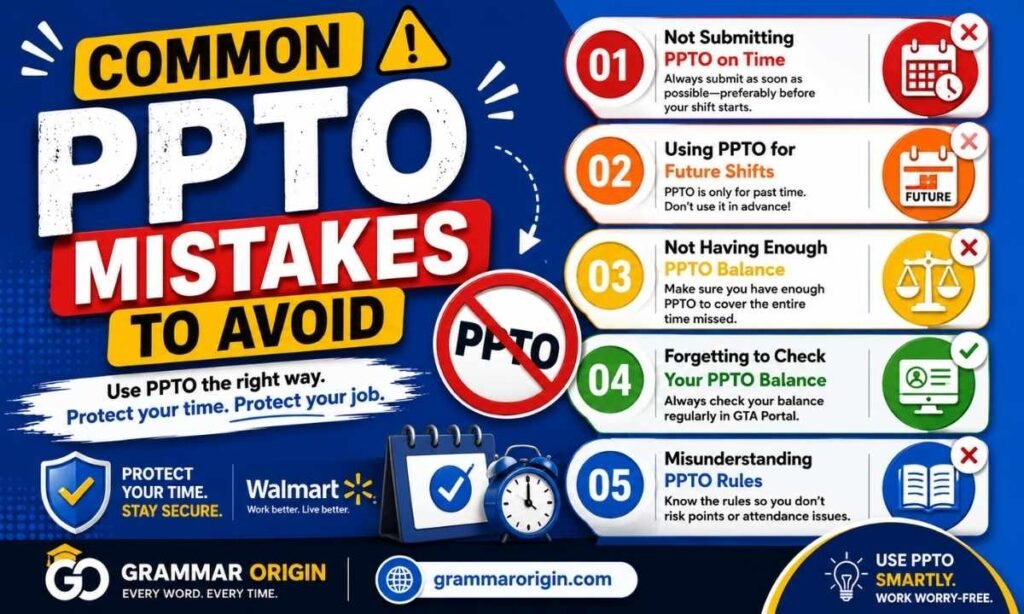
- Waiting too long to submit — missing the 7-day window can cost you attendance protection even if you had enough PPTO.
- Assuming all employers use the same PPTO rules — policies vary, so don’t rely on general information alone.
- Confusing PPTO with regular PTO — using the wrong one won’t give you attendance protection.
- Not checking your balance before an absence — you could unknowingly dip into unprotected PTO instead.
- Ignoring your state’s sick leave rules — in some cases, you may have separate protections beyond what PPTO covers.
Avoiding these mistakes is usually just a matter of checking your balance and submitting on time.
How to Check Your PPTO Balance
Most employers show your PPTO balance through:
- Your employee portal or app
- Pay stubs
- HR or payroll department
At Walmart specifically, associates can check their PPTO balance through the official employee app or portal. If your balance looks incorrect, it’s worth confirming with HR directly rather than guessing.
Frequently Asked Questions
What does PPTO mean?
PPTO stands for Protected Paid Time Off. It’s paid leave that also protects you from attendance penalties when used correctly.
Is PPTO the same as PTO?
No. PTO simply pays you for time off. PPTO pays you and protects your attendance record.
Can PPTO be used for being late or leaving early?
Yes. PPTO can cover partial-shift issues like tardiness and early outs, not just full-day absences.
What happens if I don’t have enough PPTO to cover an absence?
The remaining hours are usually pulled from regular PTO. You still get paid, but only the PPTO-covered portion is protected from attendance points.
How long do I have to submit PPTO after an absence?
Typically seven days from the date of the absence, though policies can vary by employer.
Does PPTO expire?
Some employers allow rollover, while others set limits on how much can carry over. Check your specific company policy.
Can part-time employees earn PPTO?
In many cases, yes — though accrual rates may be lower than for full-time employees.
Is PPTO required by law?
No, PPTO itself isn’t a legal requirement, but it can satisfy state paid sick leave laws where they exist.
Final Thoughts
PPTO, or Protected Paid Time Off, gives employees a way to get paid for missed work without losing ground on attendance. It’s most widely used at Walmart, where it works alongside regular PTO but serves a different purpose — protection, not just pay.
The key is knowing your balance, submitting on time, and understanding how PPTO interacts with regular PTO when your balance runs low. Getting these basics right means fewer surprises and fewer attendance points down the road.