
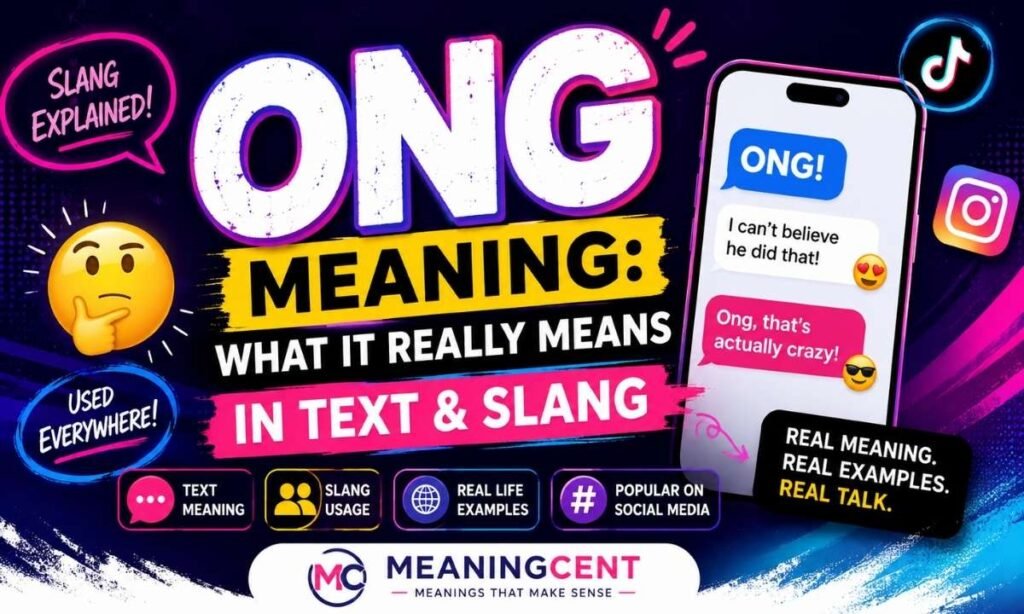
So you got a text that just says “ong” and now you’re stuck staring at your screen. What does that mean? In short, it stands for “On God,” an internet slang phrase people use when they want you to know they’re being completely serious.
It shows up everywhere from TikTok comments to late-night group chats, and it’s not going anywhere soon. This guide breaks down this popular texting abbreviation, where it came from, and exactly how to use it (or reply to it) without sounding out of touch.
What Does ONG Mean Meaning in Text?
ONG means “On God” in text messages. People type it when they want to back up a statement and make sure the other person knows they’re telling the truth.
Think of it as a texting shortcut for “I swear” or “I’m not lying.” It usually shows up right after or before the point someone is trying to drive home.
For example, someone might text “that test was brutal ong” to stress just how hard it really was. The word doesn’t change a sentence’s meaning — it just turns up the volume on it.
What Does ONG Mean Slang Meaning?
As slang, this term works as an emphasis word rather than a formal grammatical piece. It tells the reader “believe me” without adding extra words.
People lean on it for a few different jobs:
- Backing up something that sounds hard to believe
- Agreeing strongly with someone else’s point
- Adding punch to an exciting or funny moment
- Reacting to news that catches them off guard
None of these uses stray far from the core idea of sincerity — the tone just shifts depending on what’s being said.
What Does ONG Mean in Chat?
In chat apps, it usually confirms that whatever was just said is true and not exaggerated. It often lands as a one-word reply on its own.
A: He actually showed up two hours late. B: ONG he did.
Here, that single word is doing the work of a whole sentence — confirming the story without repeating it. Sometimes it flips into pure excitement instead of confirmation, especially when there’s nothing to prove, just something to react to.
What Does ONG Mean on Snapchat?
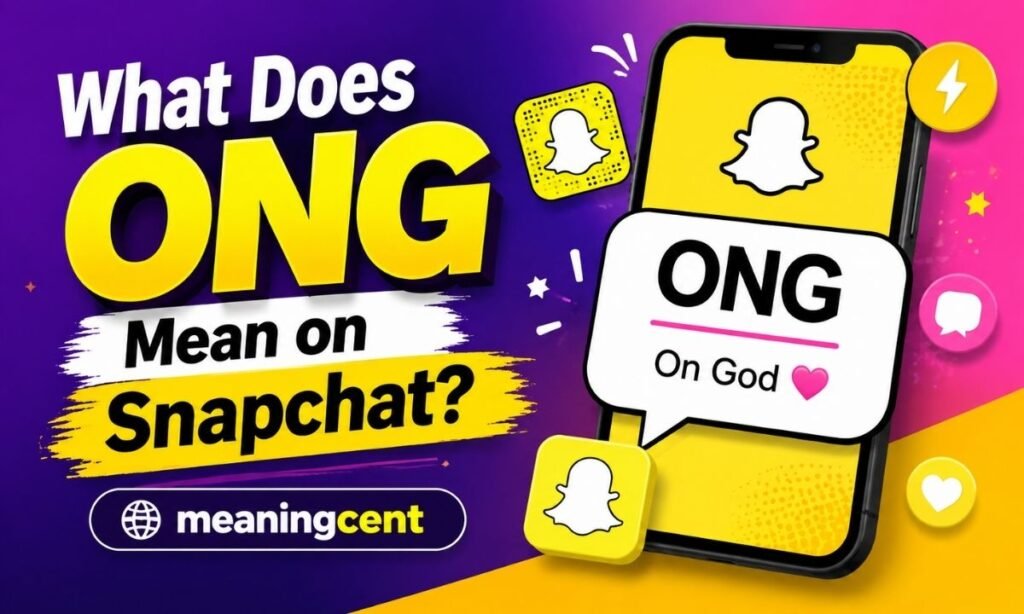
On Snapchat, it carries the same meaning — On God — but fits the platform’s fast, disappearing-message style especially well. Snaps move quickly, so short slang like this keeps conversations flowing.
You’ll spot it in private chats, group threads, and story replies. Someone reacting to a funny Snap might just fire back “ong” instead of typing out a full reaction.
Because Snapchat conversations often read like a live conversation rather than a formal message, this word blends right in without feeling forced.
What Does ONG Mean on Instagram, TikTok, and WhatsApp?
The meaning stays fixed across platforms — On God — but each app gives it a slightly different rhythm depending on how people talk there.
On Instagram, it mostly turns up in comments and DMs reacting to Reels or posts. A comment like “ong this look is everything” is doing double duty: praise plus sincerity.
TikTok
TikTok might be the single biggest driver of its popularity. Comment sections are full of it, usually agreeing with a video or backing up a relatable moment someone shared on screen.
WhatsApp usage leans more toward group chats among friends and family, especially younger users. It shows up in everyday banter — sports arguments, weekend plans, inside jokes — the same way it would in a text message.
Is ONG an Acronym, Short Form, Phonetic Spelling, or Typo?
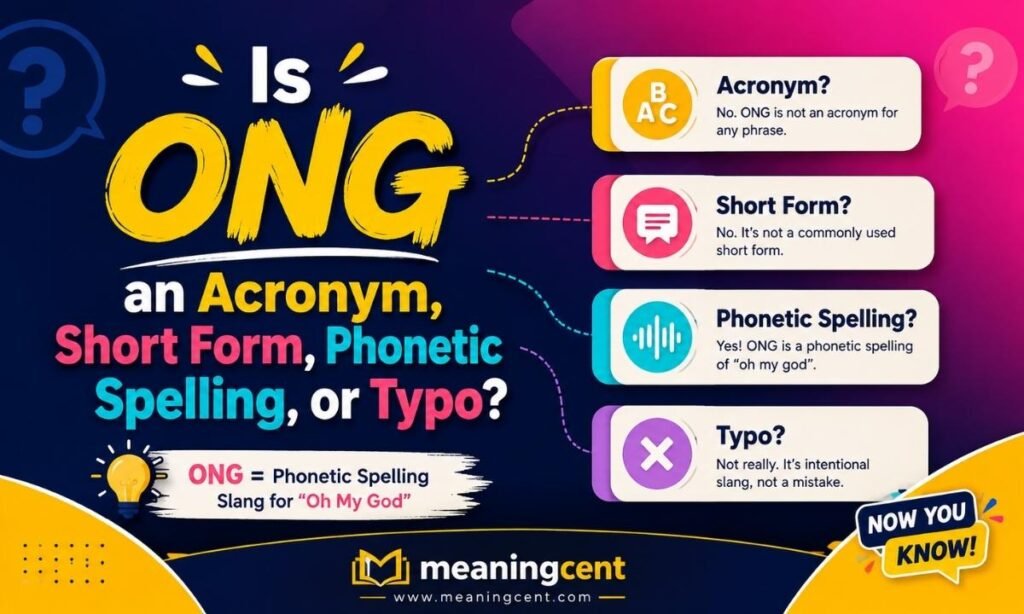
This term counts as a short form of the spoken phrase “on God,” not a true acronym in the traditional sense, and definitely not a typo. It was shortened on purpose as texting culture picked up speed.
| Type | Fits It? | Why |
| Acronym | Partly | Each letter maps to a word, but it started as spoken slang, not a formal name |
| Short form | Yes | It’s a deliberate shortening of “on God” for faster typing |
| Phonetic spelling | No | It doesn’t mimic how the phrase sounds out loud |
| Typo | No | It’s an intentional abbreviation, not a keyboard slip |
A lot of people assume it’s a rushed misspelling of “OMG,” but the two terms come from completely different phrases and mean different things.
Tone and Context Variations
The core meaning barely shifts, but the emotional temperature around it changes a lot depending on who’s talking and why.
Funny Tone
Among friends, this kind of line often shows up in exaggerated, joking claims where nobody’s actually questioning the truth.
A: I beat the game in one sitting, no breaks. B: ONG?? How are your eyes still open.
Sarcastic Tone
Flip the delivery and it can carry doubt instead of belief, especially when paired with an eye-roll energy.
A: I’m waking up at 6am tomorrow, for real this time. B: ONG, sure you are.
Romantic Tone
In flirty or affectionate texts, it softens into something closer to reassurance.
A: Tell me you actually miss me. B: ONG, more than you know.
Angry Tone
During an argument, it turns into a way of digging in and defending a position harder.
A: You knew about this the whole time. B: ONG I didn’t, stop putting words in my mouth.
Playful Tone
Casual hangouts and group chats use it to hype something up without any real stakes attached.
A: This song needs to be the wedding entrance song. B: ONG, adding it to the playlist right now.
Read More Related posts What Does AITA Mean
Real Chat Examples
Example 1
A: You actually walked here in the rain? B: ONG, my umbrella broke halfway.
Example 2
A: This playlist is doing something to me. B: ONG, on repeat all week.
Example 3
A: He said he’d call and never did. B: ONG, classic him.
Example 4
A: Did the flight really get delayed four hours? B: ONG, I almost missed my connection.
Example 5
A: I think I aced that interview. B: ONG, tell me everything.
Example 6
A: This cafe is way too overpriced. B: ONG, five bucks for a small coffee.
Example 7
A: You didn’t actually forget my birthday. B: ONG I panicked, I’m so sorry.
Example 8
A: That plot twist wrecked me. B: ONG, I had to pause the episode.
Example 9
A: Is the new update actually faster? B: ONG, night and day difference.
Example 10
A: He’s been ignoring everyone all week. B: ONG, even the group chat.
Example 11
A: You really finished the report already? B: ONG, stayed up till 2am for it.
Example 12
A: This heat is unbearable today. B: ONG, my phone overheated just walking outside.
Example 13
A: She actually apologized first? B: ONG, didn’t see that coming either.
Example 14
A: That was the loudest thunder I’ve ever heard. B: ONG, the whole house shook.
Example 15
A: Are you seriously quitting your job? B: ONG, handed in my notice this morning.
Grammar and Language Role
What Part of Speech Is ONG?
It functions as an interjection rather than a noun, verb, or adjective. It sits outside a sentence’s grammar and adds emotional weight instead of new information.
Sentence Position
It can slot in almost anywhere without breaking the sentence.
- Start: “ong, that’s insane.”
- End: “You’re right about that, ong.”
Does It Replace a Full Sentence?
Sometimes, yes. On its own, it can stand in for an entire response like “I completely agree” or “that’s true.”
A: This burger might be the best one in the city. B: ONG.
Tone Impact
Dropping it into a message instantly makes the sentence read as more casual, more animated, and a little more urgent than it would without it.
Formal vs Informal Use
| Setting | Appropriate? |
| Text messages | Yes |
| Social media comments | Yes |
| Group chats | Yes |
| Work email | No |
| Academic writing | No |
| Client-facing documents | No |
How to Reply When Someone Says ONG
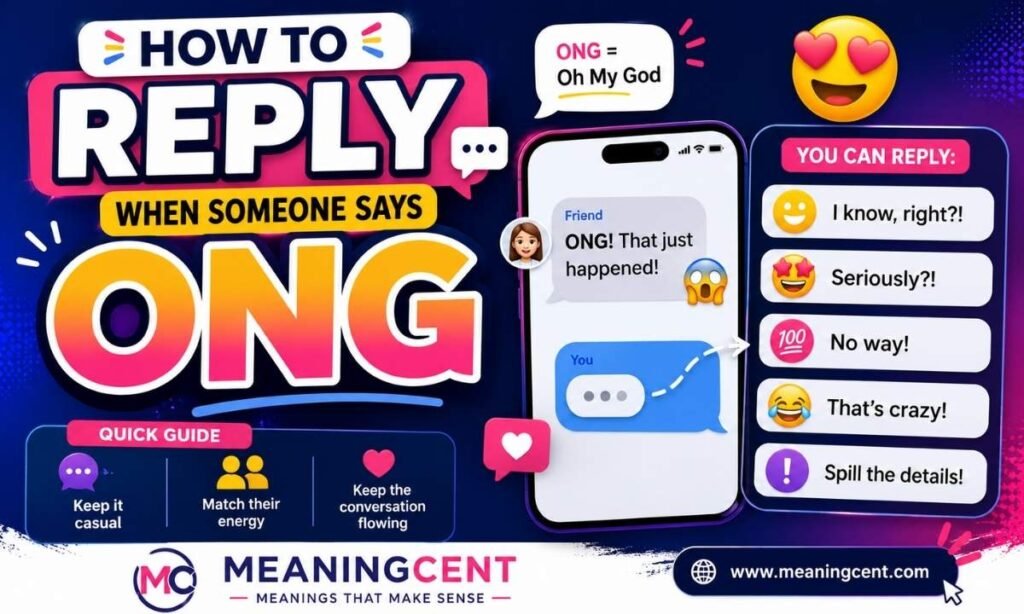
The right reply depends entirely on how serious or lighthearted the original message felt.
Funny Replies
- “Certified truth-teller moment.”
- “The court accepts your testimony.”
- “I need receipts, but okay.”
Serious Replies
- “I believe you.”
- “That actually makes sense now.”
- “Thanks for telling me straight.”
Flirty Replies
- “If you’re saying that, I’m trusting you completely.”
- “That’s actually really sweet.”
- “You’re making it hard to focus right now.”
Neutral Replies
- “Fair enough.”
- “Good to know.”
- “Makes sense.”
Comparison Table: ONG vs Similar Slang Terms
| Term | Full Meaning | Typical Use | Intensity |
| ONG | On God | Swearing something is true | High |
| ISTG | I Swear To God | Strong emphasis, often heated | High |
| FR | For Real | Casual agreement or confirmation | Medium |
| NGL | Not Gonna Lie | Sharing an honest opinion | Medium |
| No Cap | No lie | Denying exaggeration | Medium |
| TBH | To Be Honest | Neutral opinion sharing | Low |
ONG vs ISTG
Both terms swear on something, but ISTG usually carries a sharper, more urgent edge — it often shows up mid-argument or when someone feels genuinely disbelieved. This one can carry that same weight, but it’s just as comfortable in a lighthearted comment.
ONG vs FR
FR asks or confirms whether something is true, while this term plants a flag and swears by it. “FR that’s crazy” sounds like agreement; “fr that’s crazy” sounds like a casual nod, while the same line said this way sounds like a personal guarantee.
Who Uses the Term ONG?
Age Groups
Teenagers and young adults use this slang the most, though it’s crept into wider use as older users pick it up from social feeds and younger family members.
Gen Z vs Millennials
Gen Z
Gen Z treats it as a default part of everyday texting, especially on TikTok, Snapchat, and Discord. It’s rarely a conscious choice — it’s just how the sentence comes out.
Millennials
Millennials recognize and increasingly use the term, but many still default to older staples like “OMG” or “literally.” Adoption usually happens through exposure to younger coworkers, siblings, or social feeds rather than organic habit.
Regional Usage
This slang shows up most in the United States, where it originated, and has spread steadily through the UK, Canada, and Australia thanks to shared social platforms and meme culture.
Platforms Where ONG Is Most Common
TikTok comments lead the pack, with Snapchat, Instagram, Discord, and X close behind. It also appears regularly in gaming voice chats and WhatsApp groups among younger users.
Origin and Internet Culture Insight
Where Did ONG Come From?
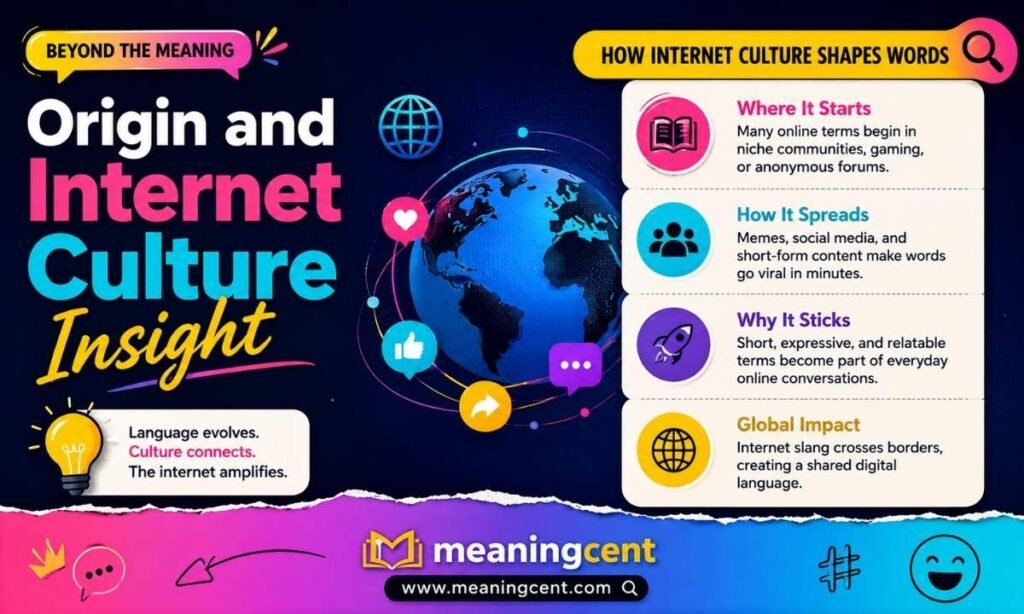
The root phrase “on God” comes out of African American Vernacular English, where it’s long been used to swear that something is true — similar to saying “on my life.” Urban Dictionary logged an entry for the phrase back in 2008, and it picked up steam on Twitter around 2014 before exploding through hip-hop song titles from artists like Kanye West, Juice WRLD, and Gucci Mane in the years that followed.
The shortened spelling caught on as texting sped up and people looked for quicker ways to type the same sincerity. TikTok culture in the early 2020s pushed it from niche slang into something almost everyone under 30 recognizes.
Fast Typing Culture
Typing “I swear I’m serious” takes time. Typing three letters takes half a second — and in fast-moving group chats or comment sections, that speed matters more than people realize.
Meme Culture Influence
Memes thrive on exaggeration, and this word fits that energy perfectly. It reads as dramatic and instantly recognizable, which is exactly what a caption under a chaotic video or reaction image needs.
Why People Say ONG on TikTok
TikTok comment sections reward short, punchy reactions, and this word delivers exactly that in three letters. Trends move fast, so nobody’s writing paragraphs to explain how relatable a video felt.
It also signals authenticity in a space full of staged content — dropping it under a video is a quick way of saying “this is genuinely how I feel, not just a like.”
Experience-Based Insight
In actual day-to-day conversations, it rarely carries any real religious weight. Most people who use it have never once connected it back to its literal wording — it’s simply become a stand-in for “trust me.”
What’s interesting is how it functions almost like a volume knob on a sentence. Saying “yes” is flat; adding those three letters turns the same answer into something that feels more personal and more convincing, which is probably why the habit spread so fast.
Is ONG Rude?
No, it isn’t considered rude in casual conversation. It’s treated as harmless slang by the vast majority of people who see or use it.
That said, because it’s rooted in the phrase “on God,” a small number of people with strong religious views might feel uneasy about it. Reading the room before using it around someone you don’t know well is a reasonable habit.
Is ONG a Bad Word?
No. It isn’t profanity, and it isn’t flagged or filtered on major platforms the way actual bad words are.
It’s simply an emphasis word, similar in weight to saying “seriously” or “honestly” — nothing about it crosses into offensive territory for most audiences.
Should You Use ONG in School or the Office?
School
Using this slang with friends between classes is completely normal and won’t raise eyebrows. It doesn’t belong in essays, formal presentations, or anything a teacher will grade for tone and structure.
Workplace
Steer clear of it in emails, client messages, or written reports. Swap it out for phrases like “honestly,” “I can confirm,” or “I mean that seriously” when the situation calls for something more polished.
Ong Meaning Explained in English
In plain English, it simply means someone is telling the truth and wants you to know it. It works the same way “I swear” or “honestly” would in a normal sentence, just condensed into three letters for speed.
There’s no hidden or complicated layer to it — once you know the phrase behind the letters, every use makes sense in context.
Read More Related posts What Does AITA Mean
Omg Ong Meaning Explained
OMG and ONG look similar but mean completely different things. OMG stands for “Oh My God” and reacts to something surprising, while ONG stands for “On God” and backs up something as true.
A: He got the promotion! B: OMG, that’s amazing.
A: I actually finished the marathon. B: ONG, that’s incredible.
Notice how the first reacts to news, and the second confirms belief in a claim — swapping the two changes the tone of the whole exchange.
Ong Meaning Slang Urban Dictionary
Urban Dictionary has carried entries for “on God” and its shortened form since 2008, consistently defining it as a way to swear something is true, similar to “I swear to God.” Crowdsourced slang dictionaries like this tend to track real usage closely, which is part of why the definition has stayed so stable over the years.
Most entries there also note that the shortened form can double as a question when someone’s asking whether a claim is actually true rather than confirming their own.
Frequently Asked Questions
What does ONG mean in text?
ONG stands for “On God,” a slang phrase used to show someone is being completely honest or serious about what they’re saying.
Is ONG the same as OMG?
No. This term means “On God” and backs up a claim as true, while OMG means “Oh My God” and reacts to surprising news.
Where did ONG come from?
It comes from the phrase “on God,” rooted in African American Vernacular English, and was shortened for texting as it spread through Twitter, TikTok, and hip-hop culture.
Is ONG rude or offensive?
No, it’s generally seen as harmless slang, though its literal wording might feel uncomfortable to some religious readers depending on context.
Can adults use ONG?
Yes. While Gen Z popularized it, there’s nothing stopping anyone from using it once they understand what it means.
What’s the difference between ONG and FR?
FR (“for real”) asks or confirms truth casually, while this term swears by it more firmly, closer to a personal guarantee.
Should I use ONG at work?
It’s best avoided in emails, reports, or client communication. Save it for texts, social media, and casual conversations instead.
Does ONG always mean “On God”?
In texting and social media, yes — almost always. Outside that context, the letters can occasionally stand for something unrelated, like an organization’s name, but that’s rare in everyday chat.
Conclusion
At its core, ONG means “On God” — a short, fast way of telling someone you’re being completely serious. Whether it shows up in a TikTok comment, a Snapchat reply, or a late-night text, the intent stays the same: back up a claim and make it feel believable.
Once you know what’s behind those three letters, every version of it — funny, sarcastic, romantic, or flat serious — starts to make sense in context, and replying naturally becomes second nature.